

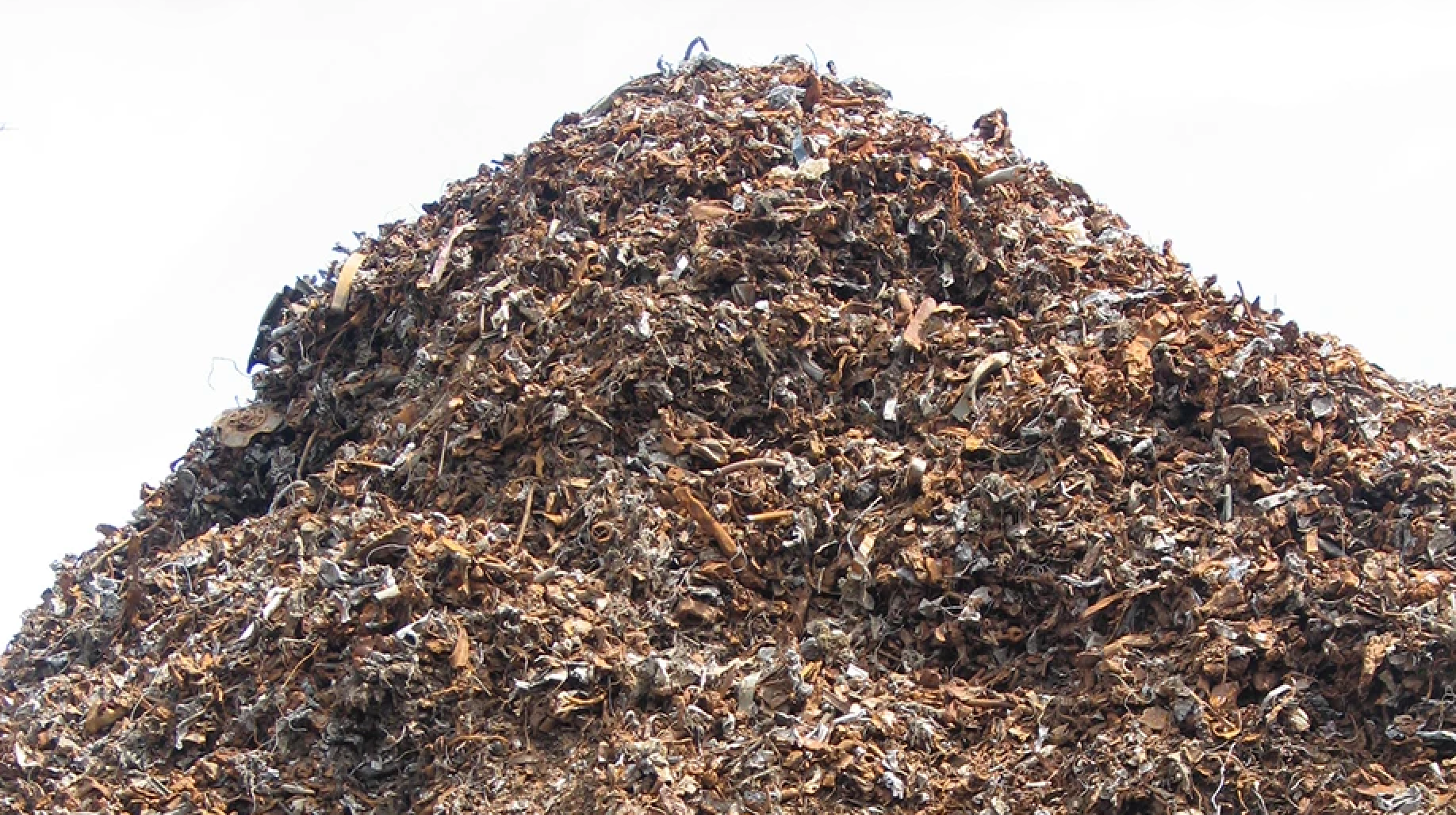
American electric arc furnace (EAF) steel mills have continued to operate at or near 80 percent of capacity in the early summer of 2026, but that demand alone has not been enough to spur rising prices for recycled steel.
Prices paid by domestic mills for obsolete scrap hit a temporary peak this February while winter weather was causing collection and shipping interruptions. In the ensuing months, the value of shredded scrap and heavy melting steel (HMS) has drifted downward, according to mill purchasing transaction figures collected by the Raw Material Data Aggregation Service (RMDAS) of Pittsburgh-based MSA Inc.
Throughout the late winter, spring and early summer 2026 time frame, mills in the United States have been engaged in steady steel output, according to tracking performed by the Washington-based American Iron and Steel Institute (AISI).
While the week ending with the July 4 holiday might seem like a logical one to offer a pause in American steel output, AISI says instead steel production of 1.856 million tons ended a slight two-week decline in output and saw America’s mill capability utilization (capacity) rate return to above 80 percent.
Output in the week ending July 4 was 4.3 percent greater compared with the 1.78 million tons of steel made one year earlier, and U.S. producers this year to date have made 6 percent more steel compared with their output in the first six months of 2025.
Also tracking mill output in the U.S. is satellite image analysis firm Navigate Commodities. In early July, that Singapore-based firm and its Managing Director Atilla Widnell offer a snapshot of what satellite imaging was indicating July 4, breaking down capacity information into steelmaking technology and geographic categories.
Navigate’s figures show a smaller overall capacity rate (76.3 percent) compared with AISI data and reveal a considerable gap between largely recycled-content electric arc furnace (EAF) production and more iron ore-intensive blast furnace/basic oxygen furnace (BOF) production.
In early July, EAF mills in the U.S. were operating at greater than 83.8 percent capacity, while American blast furnaces were operating at a 54 percent capacity rate.
Geographically, the EAF-intensive South hosts some of America’s busiest mills, with facilities there in early July operating at 87.6 percent of capacity. Steel mills in the Great Lakes region, meanwhile, recorded a 67 percent capacity rate, according to Navigate Commodities.
As noted earlier this year by two American recyclers who operate deepwater port locations, disappointing levels of interest from overseas buyers likely have contributed to a price ceiling on recycled steel.
Recent reports by media outlets including Kallanish Commodities and Davis Index indicate that tepid demand appears to be carrying over into the summer months.
Kallanish in early July characterizes the scrap-dependent Turkish steel sector as encountering disappointing demand for its finished and semifinished steel products and potential Indian recycled steel importers as awaiting price declines before reentering the U.S. market.
The news and pricing service also characterizes Chinese internal steel demand as being weak, which often triggers a flood of exported steel into Southeast Asian markets and beyond in a ripple effect long decried by producers of steel in other nations.
In the second week of July, Davis Index is describing prices being offered to U.S. East Coast exporters for cut grades as dropping by $7 to $16 per ton, while bids for shred are holding closer to June levels.
Prices for material exported from the U.S. West Coast have been lower than domestic or East Coast prices throughout much of 2026, and that trend appears to be holding into the second half of the year.
Davis Index in the second week of July refers to price offers to Los Angeles shippers as flat, with metals recyclers preferring to sell into the domestic market rather than ship at reduced values to potential buyers in Taiwan, Thailand and Vietnam. The landscape is similar in San Francisco and in Portland, Oregon, according to the news and pricing service.
For several decades, Europe has been a relatively modest buyer of American recycled steel exports, both because it generates its own scrap and because its steel mill sector has been slower to convert from blast furnace/BOF technology to EAF production.
Copy from Recycling today