

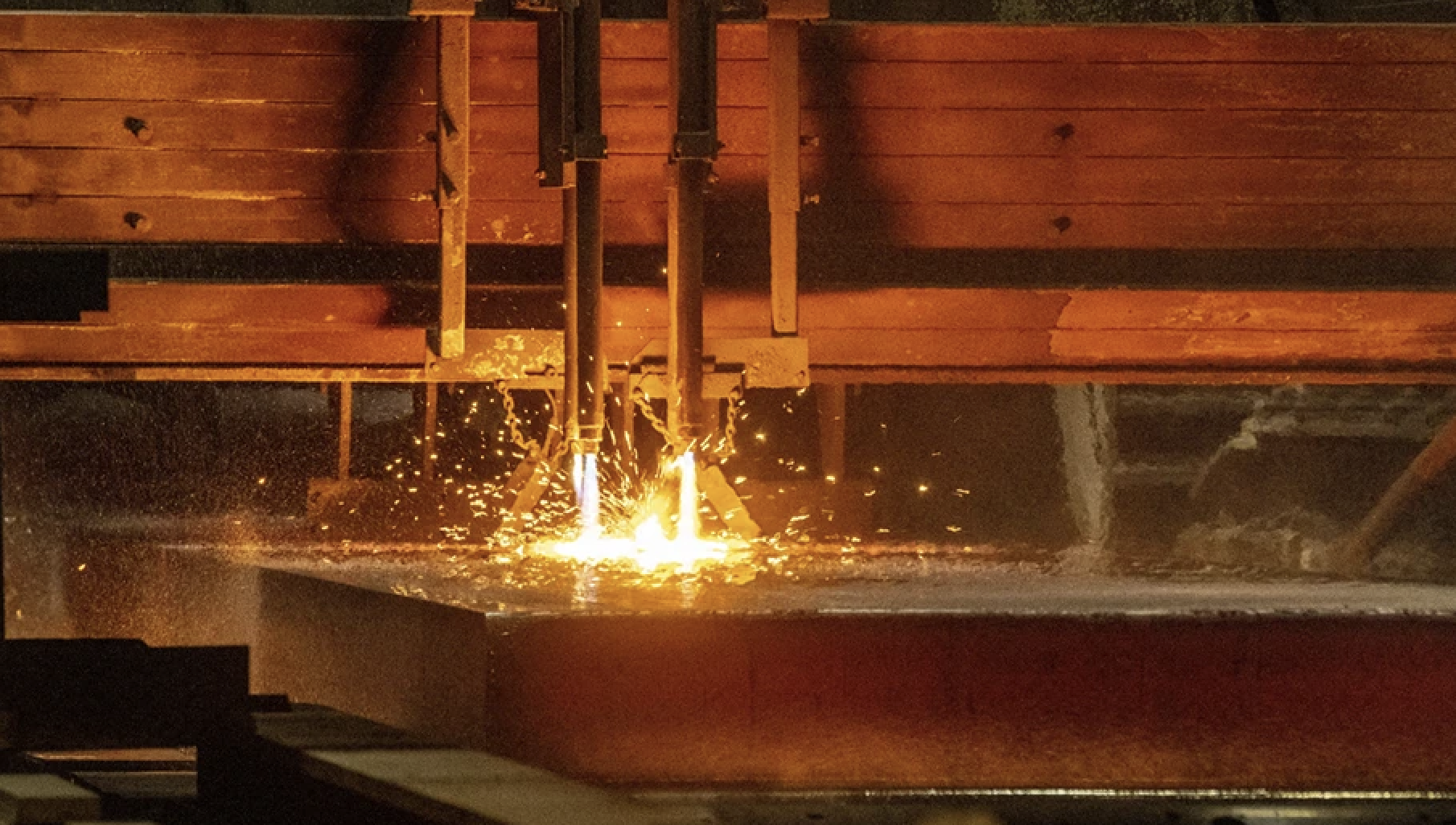
The trade group says a white paper by China’s Ministry of Commerce downplays government subsidy activity in that nation
A white paper issued this July by China's Ministry of Commerce carries the title “China’s Position on the So-called Excess Capacity Issue” and is intended to rebut criticisms aimed at the nation’s world-leading production of steel, aluminum, copper, stainless steel, plastic and other materials and manufactured items.
In the steel sector, the Steel Committee of the Paris-based Organization for Economic Cooperation and Development (OECD) has been among the groups asking whether China, with about 17 percent of the world’s population, should be producing roughly 50 percent of the world’s steel each year.
Even though China is not a top-five shipper of imported steel in the United States, the Washington-based American Iron and Steel Institute (AISI) consistently has pointed to China’s overcapacity as an issue in American steel demand and pricing. Both organizations often cite government subsidies as an issue in the debate.
In the 40-page July white paper, the Chinese government does not specifically mention steel. Regarding the role of subsidies within its global manufacturing presence, the Ministry of Commerce says, “There is no necessary connection between industrial subsidies and excess capacity,” adding, “Sound industrial subsidy policies help correct market failures, advance technology innovation, protect [the] environment, reduce poverty and promote balanced development, rather than cause the so-called excess capacity.”
The Ministry of Commerce continues, “China always strictly observes World Trade Organization (WTO) rules,” adding its subsidies “mainly go to scientific R&D, initiatives on industrial application of technology and market consumption, among other areas.”
One portion of the document reads, “The rapid growth of China’s modern industries is driven by innovation.”
Kevin Dempsey, AISI president and CEO, has issued a statement saying in part, “Global overcapacity is not, as the Ministry of Commerce’s report suggests, a fiction. Excess capacity in the global steel industry has been extensively documented by the OECD and remains a serious threat to the American steel industry.”
He adds, “In 2025, in the face of multiyear declines in Chinese domestic steel demand, Chinese steel exports accelerated to 131 million metric tons, as much as all of North America’s steel consumption combined."
Dempsey continues, “According to the OECD, Chinese steel firms in 2024 received 15 times as much in subsidies relative to their asset size as steel firms in the rest of the world. A near doubling of China’s steel subsidy rate since 2019 has fueled Chinese oversupply and its steel export surge.”