

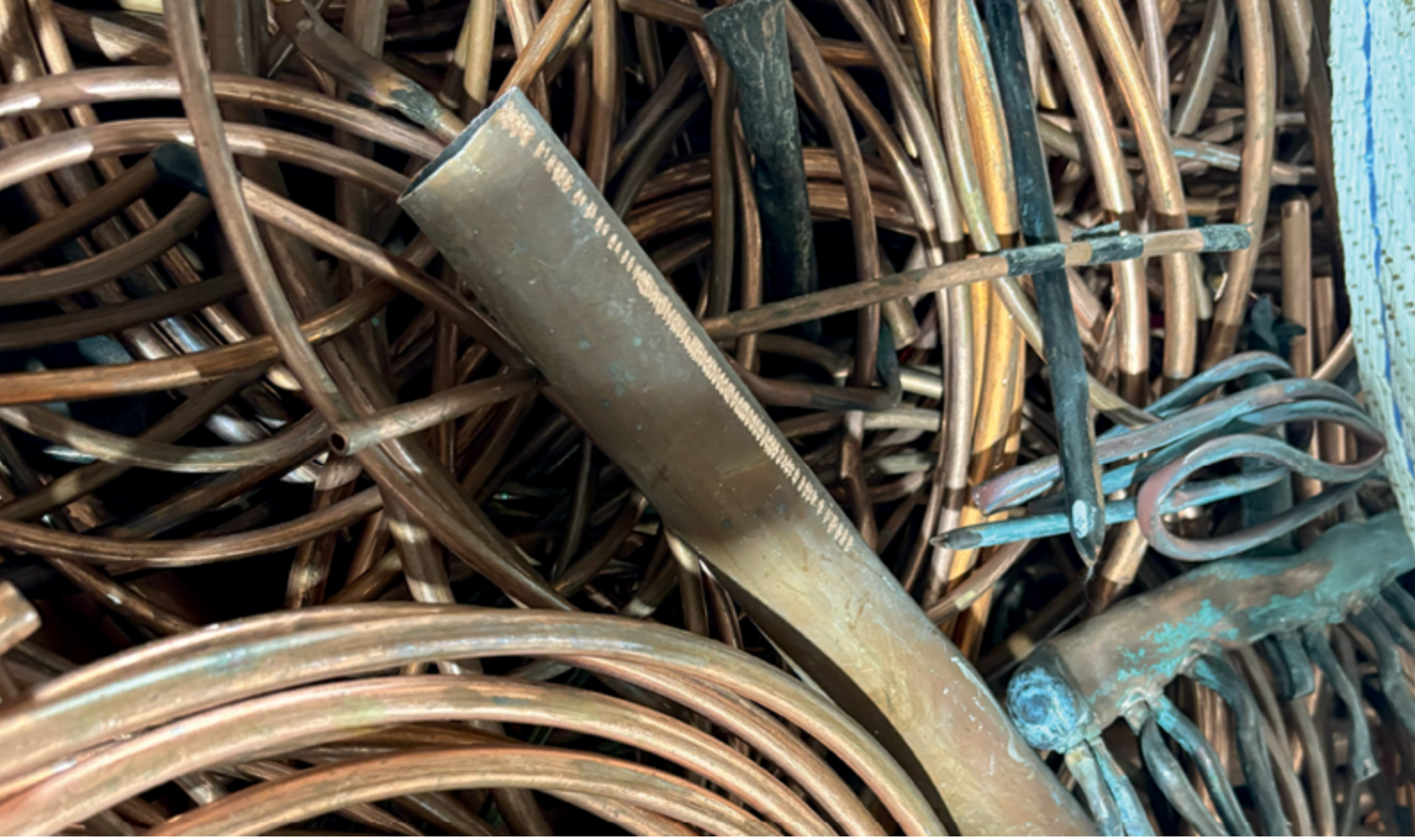
In a decade marked by tariffs and trade restrictions, producers of secondary aluminum, copper and other nonferrous metals continue to shop globally for scrap.
Metals industry news posted to the Recycling Today website this decade has included what many buyers and sellers of recycled material likely would consider unwelcome amounts of coverage devoted to export restrictions, tariffs and other potential barriers to conducting business.
Processors and traders of recyclable aluminum, copper, stainless steel and other metals that must focus on procuring supply and monitoring prices now also find themselves keeping one eye on policies issued in Washington, Brussels, Beijing and other world capitals.
The word “resilience” perhaps has been overused in the past several years, but it might be the most appropriate description of the ability and the persistence of nonferrous traders to keep material flowing across borders despite hurdles placed in the way.
Self-inflicted blockades
Countries could have reasons to place tariffs or other restrictions on imported goods, and it is a policy tool used by nearly every country.
Actions taken in the previous decade in China and by the current president of the United States, however, raise questions in the nonferrous sector about whether the policy tool has been applied properly.
In China, a series of policy decrees bearing names such as Green Fence and National Sword was designed to prevent environmentally troublesome and high-residuals recycled materials shipments from entering the country.
Critics of these policies and their enforcement methods say they also restricted the inflow of valuable industrial feedstocks that had been used in the production of secondary nonferrous metals (and recycled-content paperboard).
Many Chinese metals recycling sorting firms and secondary metals producers voted with their feet by setting up operations in Malaysia and Thailand.
In those nations, as well as in Indonesia, governments have scrutinized inbound materials in a way that mimics the experience in China, calling into question the staying power of additional investments made in the Asian secondary nonferrous sector.
Environmental protection also has been pointed to as the reason for formal procedures developed in Brussels and applied to outbound recycled materials shipments from the EU.
Revisions to the EU Waste Shipment Regulation (WSR)—a label of questionable accuracy when applied to nonferrous metals shipments—consist of additional documentation and permission steps when material flows from the EU to non-Organization for Economic Cooperation and Development nations.
Finally, processors and traders in the United States have had to keep a close eye on executive orders issued by the Trump administration.
Tariffs designed to bolster U.S. metals production have been met with counter-tariffs by several global trading partners.
Additionally, recyclers in the U.S. have worked in cooperation with the Washington-based Recycled Materials Association to parse whether the proclaimed tariffs apply to inbound scrap shipments.
A tale of two metals
Tension already was a regular feature for metals traders prior to 2025, considering the policies in parts of Asia and in Europe that treat recycled metals as “waste” or “foreign garbage.”
Now, whether from tariffs or a transportation-disrupting conflict in the Middle East, the tension has once again increased.
Although traders of recycled aluminum and copper continue to connect global markets, statistics covering export shipments from the U.S. show a divergence in trade patterns.
In the area of copper recycling, monthly reports released by the International Copper Study Group, headquartered in Lisbon, consistently refer to China as the center of global secondary copper production.
However, trade statistics indicate the U.S. sent dramatically less copper scrap to China in 2025 compared with the previous year, with U.S. shippers needing to find alternative markets.
In 2024, more than 394,000 metric tons of copper-bearing scrap were exported from the United States to China, according to U.S. Census Bureau figures aggregated by the U.S. Geological Survey (USGS).
Despite the movement of some processors and producers to other Asian countries, China was far ahead of the next leading copper scrap destinations that year: Canada at about 103,00 metric tons and Thailand at fewer than 96,000 metric tons.
China had received fewer than 42,000 metric tons of copper-bearing scrap from the U.S. through the first three quarters of 2025, according to USGS figures that have been updated through September 2025.
While nations such as Thailand and India picked up some of the slack in U.S. exports purchased, the total export figure shows trade disruptions—combined with increased U.S. investments in secondary copper production—have had an impact.
According to USGS, the United States exported over 950,000 metric tons of copper-bearing scrap in 2024. Through the first nine months of 2025, however, the comparable figure was just 467,000 metric tons.
Adding an estimated increase to the 2025 figure to compensate for the missing quarter, the 2025 total would be around 620,000 metric tons exported, representing a nearly 35 percent drop.
For cross-border traders of aluminum scrap, the story in 2025 was different. USGS statistics show the volume of aluminum-bearing scrap exported actually grew to more than 2.2 million metric tons last year, rising 6 percent from the 2.1 million metric tons exported in 2024.
Traders in aluminum scrap will be watching for the impact of new melt shop capacity in the U.S. secondary sector to figure out if outbound aluminum scrap shipments are poised to drop or if newer domestic melt shops might instead represent replacement capacity.
Also growing in importance is the progress of legislation intended to launch an investigation into whether aluminum scrap exports from the U.S. present any national or economic security risks.
Passages to India
India’s growing economy has provided an increasingly important market for U.S. nonferrous scrap exports.
Buyers in that nation (as well as in neighboring Pakistan) maintain connections in Europe, the U.K. and the Middle East when seeking material.
In what could create increased opportunities for U.S. recyclers, the EU WSR procedures have raised questions about that trade route starting next year.
Producers of recycled-content metal in India and the traders who help supply them are striving to ensure those looming changes do not restrict their access to secondary commodities.
A late June feature article posted to the Delhi-based Business Standard website includes remarks from Sanjay Mehta, a recycled steel industry executive who is president of the Material Recycling Association of India, and Dhawal Shah, a Mumbai-based nonferrous metals trader who is a longtime officer with that group.
The article by Akshita Singh of the Business Standard notes the WSR has been presented by EU politicians as a means of preventing undesirable material leaving the EU to be shipped to destinations that might not want them nor have the environmental or safety protocols to handle them.
Another way of viewing the WSR in an era of “resource nationalism,” however, is as a tool to keep industrial feedstock within the economic bloc for use by the EU’s own manufacturing sector rather than offering the materials on the well-established global market.
“India’s metal recycling industry continues to depend considerably on imported recyclable materials, especially for nonferrous metals and high-quality processed ferrous materials,” Mehta says in the article.
The article quotes metals industry sources who say Indian steelmakers are among those with established recycled metals relationships with European suppliers. The article’s author, however, concludes that aluminum production could be “the most vulnerable segment because the secondary aluminum industry continues to rely overwhelmingly on imported scrap.”
Buyers of both types of scrap can turn to suppliers in the U.S., the U.K., Japan and other parts of the world, Singh writes, but material from those nations could rise in price or otherwise become more difficult to obtain.
As can be the case with EU regulations intended to apply in 27 different nations, how strictly WSR rules will be enforced will be a factor in whether India’s recycled materials trade connections with Europe truly weaken next year.
For nonferrous metal processors and traders, the circumstance is another example of politics and policies competing for the resources of time and attention.