

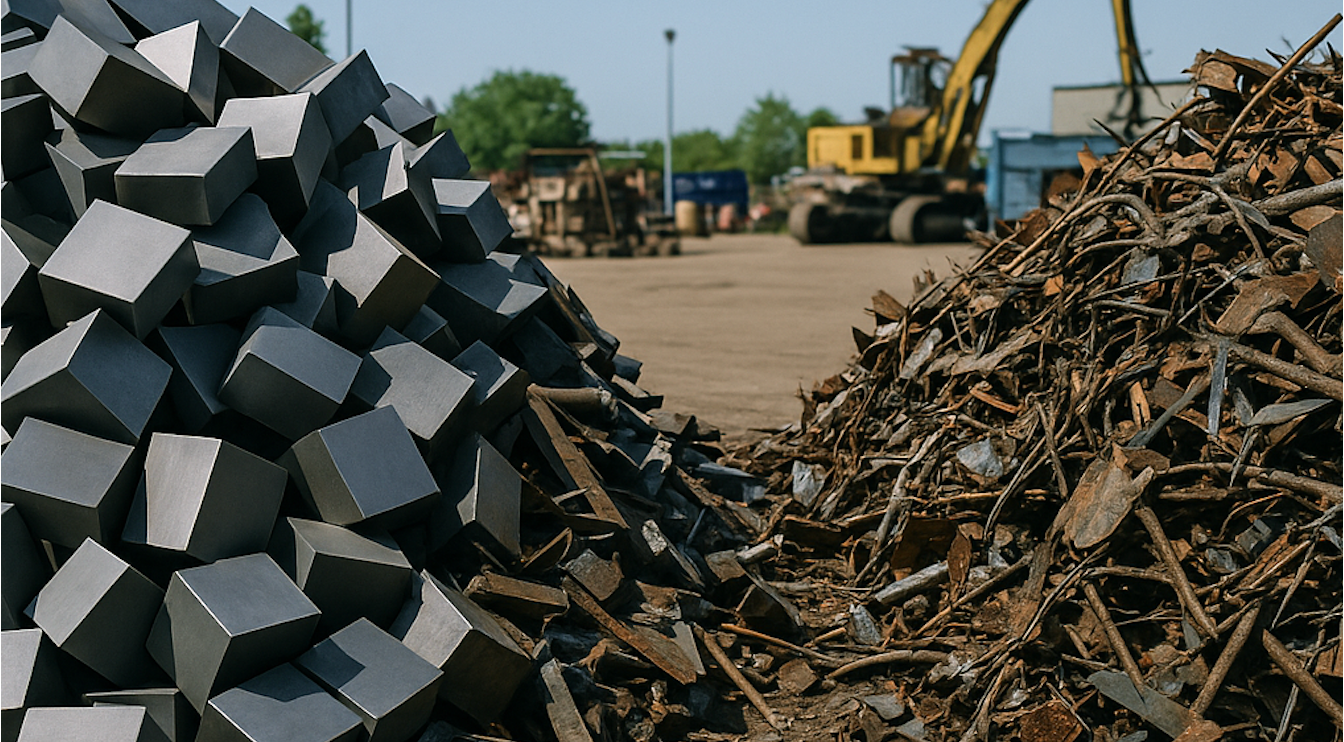
Heavy Melt Steel (HMS) is one of the most widely traded categories of recyclable ferrous materials in the global scrap industry. This classification refers specifically to recyclable steel and wrought iron that have reached the end of their useful life and entered the recycling stream.
The recycling industry divides HMS into two primary categories based on composition and quality. HMS 1, the premium grade, contains no galvanized or blackened steel components. In contrast, HMS 2 includes these galvanized and blackened materials. This distinction is crucial for steel mills and foundries that process these materials.
Both HMS 1 and HMS 2 consist exclusively of what the industry terms “obsolete scrap” – metal recovered from structures, equipment, and items dismantled or demolished after their service life. This includes materials from demolished buildings, decommissioned machinery, dismantled bridges, and other end-of-life steel applications.
The Institute of Scrap Recycling Industries (ISRI) has developed a comprehensive system for classifying Heavy Melting Steel (HMS) to maintain industry standards. This classification assigns specific numerical codes to HMS, clearly defining material requirements for each category.
HMS 1 consists of wrought iron and steel scrap, excluding galvanized or blackened steel. All HMS 1 materials must have a minimum thickness of 1/4 inch (6.35 mm). The specific codes are:
ISRI 200: Wrought iron and steel scrap with pieces not exceeding 60 inches × 24 inches. Materials must be prepared for compact charging.
ISRI 201: Similar to ISRI 200, with pieces smaller than 36 inches × 18 inches for easier handling.
ISRI 202: Maintains the same thickness requirements as other HMS 1 categories, with maximum dimensions of 60 inches × 18 inches.
HMS 2 CLASSIFICATION CODES
HMS 2 includes both black and galvanized steel with a minimum thickness of 1/8 inch (3.175 mm). This category includes:
ISRI 203: Basic HMS 2 classification for wrought iron or steel scrap, including galvanized and blackened materials.
ISRI 204: HMS 2 material with pieces not exceeding 36 inches × 18 inches in size.
ISRI 205: Similar to ISRI 204 but may include properly prepared automobile scrap. Must be free of sheet iron or thin-gauge materials.
ISRI 206: HMS 2 with maximum dimensions of 60 inches × 18 inches. May include automobile scrap but must be free of sheet iron or thin-gauge material.
HMS is typically traded as blends of HMS 1 and HMS 2 in ratios such as 80:20 (premium blend), 70:30, or 60:40, depending on quality requirements.
BENEFITS OF THE ISRI CLASSIFICATION SYSTEM
This detailed classification system offers several key advantages to the recycling industry:
The standardized codes facilitate clear communication between buyers and sellers across global markets. Recyclers can efficiently sort and process materials according to well-defined specifications. Steel mills benefit from predictable melting characteristics based on the classification. The system promotes fair pricing by clearly differentiating between material qualities.
By establishing these precise specifications, the ISRI classification system helps streamline the entire recycling process. Recyclers can properly prepare materials to meet industry standards, and end-users can confidently purchase materials that meet their specific manufacturing requirements.
PROCESSING AND FURNACE EFFICIENCY
The specifications for both HMS 1 and HMS 2 are designed with furnace efficiency in mind. The thickness and density requirements minimize the time needed to charge enough scrap for a full melt. Thinner materials, particularly those below the HMS 2 threshold, significantly increase charging time and reduce furnace productivity.
In commercial trading, HMS is often sold as blends of HMS 1 and HMS 2 in various ratios. Premium blends typically contain 80% HMS 1 and 20% HMS 2, while lower-grade mixtures might use ratios of 70:30 or 60:40, based on price and requirements.
Understanding these differences helps recycling operations sort and process materials more effectively, ensuring that steel scrap moves efficiently through the recycling stream and returns to productive use with minimal energy expenditure.
WHAT ARE THE BENEFITS OF USING HMS IN STEEL PRODUCTION?
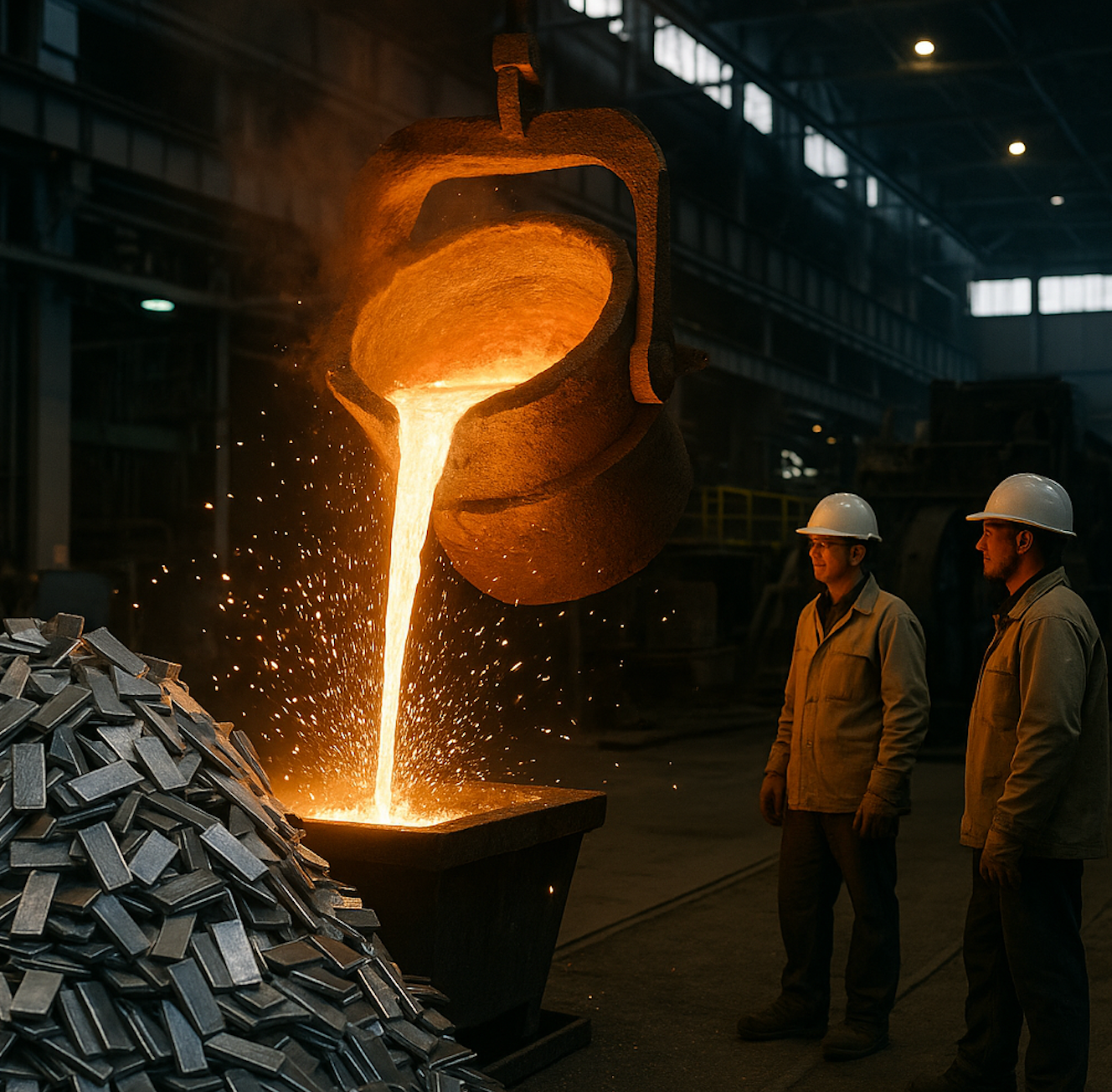
Heavy Melting Steel (HMS) offers several significant advantages in steel production, making it a cornerstone material for efficient furnace operations. The high density of HMS, particularly HMS 1 with a thickness exceeding 6mm, provides substantial benefits for producers optimizing production cycles.
One primary advantage of HMS is its contribution to furnace efficiency. The specific sizing requirements of HMS (a minimum of 1/4 inch thickness for HMS 1 and 1/8 inch for HMS 2) create ideal conditions for efficient furnace operation by minimizing charging time. This uniformity allows for predictable melting patterns and reduces the time needed to charge enough scrap for a full melt. Compared to thin mixed scrap, HMS significantly improves furnace productivity.
The density of HMS also enhances operational efficiency. HMS 1, with a density of approximately 0.7 tons/m³, provides excellent thermal conductivity within the furnace. This translates to faster heat transfer, reducing energy consumptionand shortening melt cycles. These gains significantly reduce overall production costs.
PRODUCTIVITY AND OPERATIONAL ADVANTAGES
Steel mills using HMS report notable improvements in furnace productivity. The consistent composition and minimal impurities in HMS 1 reduce the need for additional flux and alloy adjustments during the steelmaking process. This streamlined operation results in fewer interruptions and faster production cycles.
The structured sizing of HMS contributes to predictable and uniform melting, reducing temperature fluctuations within the furnace. This stability is particularly valuable in electric arc furnaces, where consistent input materials help maintain optimal operating conditions. By using HMS instead of lighter, more variable scrap, producers achieve more predictable outcomes with fewer operational adjustments.
FLEXIBILITY THROUGH STRATEGIC BLENDING
Another significant benefit of HMS is its blending versatility. Ratios such as 80:20, 70:30, or 60:40 of HMS 1 to HMS 2 allow producers to customize furnace inputs based on production requirements, material availability, and cost considerations.
This blending flexibility enables producers to balance the premium qualities of HMS 1 (higher purity, greater density) with the economical HMS 2. For higher quality output, a blend of 80:20 might be used, while cost efficiency could lead to higher proportions of HMS 2.
HMS is widely traded globally, with a strong presence in the Western Hemisphere. This availability ensures consistent supply chains, reducing procurement risks and enabling long-term planning. Established trading standards for HMS grades facilitate smoother international transactions and clarity on material specifications.
ECONOMIC AND ENVIRONMENTAL BENEFITS
Economically, HMS offers compelling advantages. Efficient furnace operation leads directly to energy savings, with studies indicating that high-quality HMS can reduce energy consumption by 10-15% compared to operations primarily using lighter, mixed scrap.
Additionally, HMS contributes to environmental sustainability. As a recycled material, HMS helps reduce the industry’s carbon footprint by decreasing reliance on virgin iron ore. Recycling HMS requires significantly less energy than primary steel production—about 60-70% less energy, with 58% lower CO₂ emissions.
When properly sorted and processed, HMS provides a reliable, high-quality input for steel production while diverting substantial metal waste from landfills. This recycling loop is a crucial component of the circular economy in steel production.
The versatility, efficiency gains, and environmental benefits of HMS continue to make it an invaluable resource in modern steel production, offering manufacturers a blend of operational excellence and sustainability.
CONCLUSION: THE IMPORTANCE OF HMS IN MODERN RECYCLING AND STEELMAKING
For steel producers seeking sustainable raw material solutions, heavy melt steel is an environmentally responsible and economically viable alternative to using virgin materials. Its availability and standardized preparation make it an efficient input for electric arc furnaces, reducing charging time and boosting productivity.
As the global steel industry advances toward greater sustainability and circular economy practices, HMS will remain crucial for meeting production demands while minimizing environmental impact.
More informations, pls log in recycling today.