

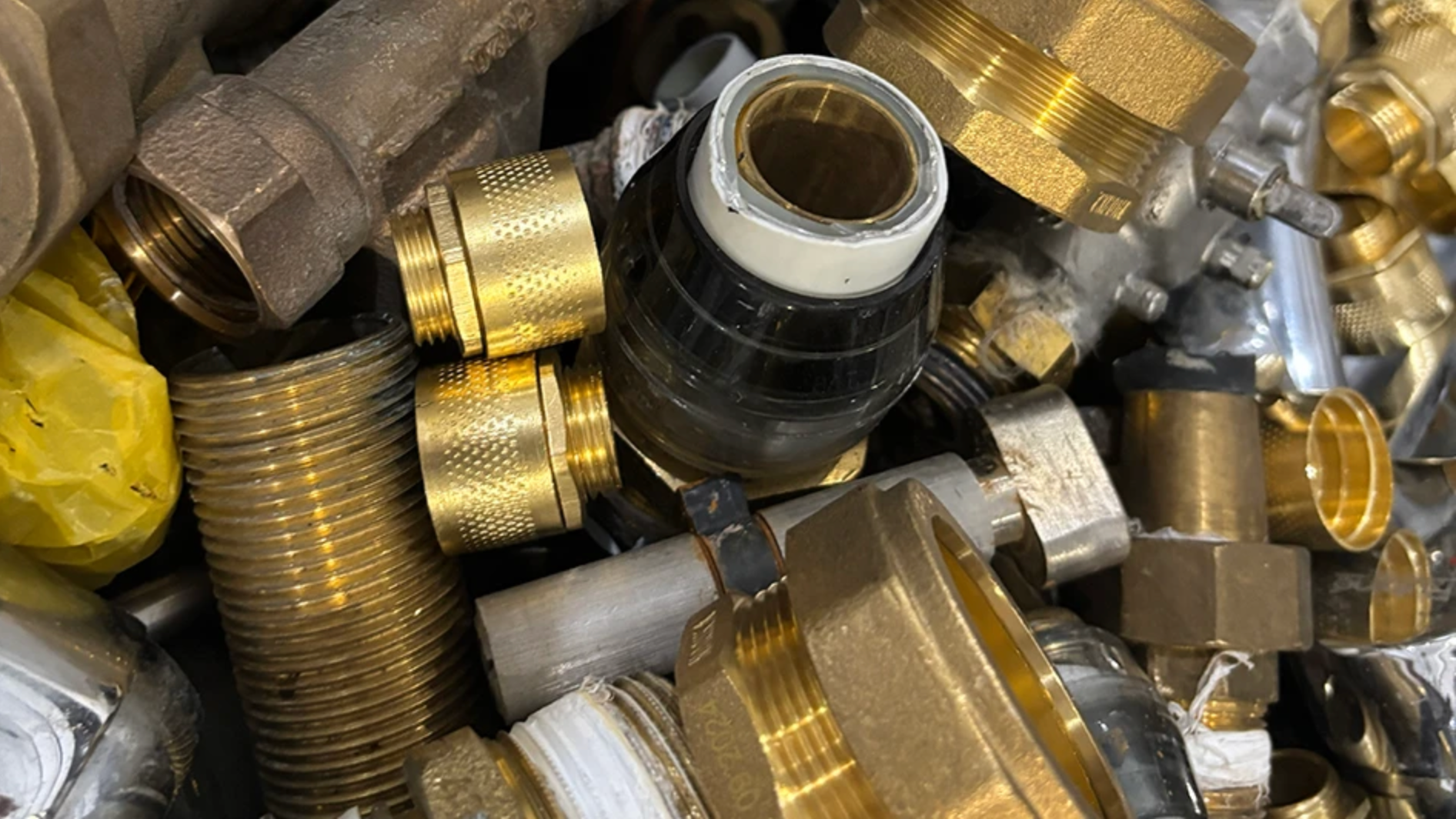
A trend toward placing restrictions on the trading of recyclable metals is likely to hamper the overall expansion of the global recycling industry, according to presenters at a Bureau of International Recycling (BIR) World Recycling Convention meeting this week.
Existing and emerging challenges to global free trade were explored during the Non-Ferrous Metals Division meeting in Málaga, Spain, on Monday, October 26.
Secondary commodities traders have been beset by import restrictions in China and other scrap deficit nations for more than a decade. Now, scrap import nations and regions, including the European Union and the United States, are enacting or holding discussions about trade restrictions on outbound material.
At the BIR meeting, Professor Frank Pothen of the University of Applied Sciences in Jena, Germany, spoke about a recent report he had published on the effects of trade barriers on recovered copper. The report was prepared for the Germany-based Circular Metal Association.
Pothen and research colleagues at Germany’s Fraunhofer Institute have concluded recycling is a fundamental part of the copper value chain. About one third of the raw material used in global copper production in 2024 came from recycled copper, they say.
The demand for copper-bearing scrap is poised to grow globally, said Pothen, indicating that by 2040 world demand for copper scrap is expected to reach 42 million metric tons, 50 percent from today’s level.
“The point of our work was to look at trade barriers and think about both the effects that we might expect once barriers are implemented, but also the side effects, the sort of things that typically might get left out in the discussion of these issues,” he told attendees.
The professor spelled out four possible consequences: fewer export outlets for nations where domestic capacity may note take up the slack; lower domestic scrap prices because recyclers face decreased revenue and tighter margins; subsequent weaker collection and sorting efforts, through which the “costly recovery of complex scrap becomes less attractive; and reduced liquidity, or less money available for investment in recycling capacity.
Pothen said export restrictions as a policy were questionable in Europe, where industries that could melt copper, aluminum and steel scrap face high energy costs, regulatory burdens and other practices that hamper their competitiveness globally.
“What we hope for the future is that we will think about regulatory systems and incentives that improve the conditions for recycling, that get incentives to invest in more sorting and refining and processing capacities, combining environmental issues with workable trade rules,” said Pothen.
He also remarked that secondary copper is not a homogeneous material stream, and that while preconsumer (factory generated) recovered copper often is suitable for direct melting and has low processing costs, complex secondary raw materials must be collected and separated—often using manual labor—before being refined.
Alloys, including brass, which accounted for 41.7 percent of all copper scrap exports from the EU in 2025, have strong downstream demand in China and India, where 80 percent of that exported alloyed scrap headed last year.
“Are there actually other companies [in the EU] that can use the scrap metals to make something out of it?” he asked. “If not, you will just have a surplus of the material. If you want more scrap metal being used within Europe, you must generate the incentives for investment in capacity.”
Another presenter stressed the importance of processing those lower-value metals closer to where they are generated.
“I encourage all the people of this convention to invest, to convert this waste into raw material because I think that it's going to be the next steps we have to make in this industry,” Joan Campmajó, CEO of Girona, Spain-based metals recycling firm ACIN, which was founded in in 2014.
Campmajó acknowledged it was easier to sell “clean” material into the European market, but said exporting lower quality grades can lead to problems. “What we are mainly focused on is to invest, to clean these materials, to be ready to sell in the EU. It is the reason we are making all our investments.”
Georgeta Postas of copper producer La Farga, also based in Spain, said last year 60 percent of her company’s copper production of 200,000 metric tons came from recycled copper.
“The Europe urban mine is a strategic resource that needs a viable value chain,” said Postas. “Ensuring access to raw material must definitely go hand in hand with maintaining industrial capabilities that can transform these materials into usable ones.”
Non-Ferrous Metals Division Board member Natallia Zholud of Poland-based TRM Metals remarked that much of the recent increase in recycling capacity in Europe was for processing (relatively clean) copper wire rods.
From Recycling today!